
Campus Security Authorities
Building a Safer, More Informed GovState Community
Keeping Governors State University safe is a shared responsibility. The Department of Public Safety works with departments, faculty, staff, and other members of the Jaguar community to make sure safety concerns and reportable crimes are identified, documented, and addressed.
One important part of that effort is compliance with the Jeanne Clery Campus Safety Act, commonly known as the Clery Act.
The Clery Act requires colleges and universities to collect and disclose information about certain crimes reported on or near campus. It also requires institutions to have processes for identifying individuals who may receive reports of crime and ensuring those reports are included in the University's Clery reporting process.
Individuals filling the role of Campus Security Authority (CSA), who have federally defined responsibilities to report certain crimes brought to their attention, help GovState meet these responsibilities.
The sections below explain this role and what they mean for the GovState community.
Campus Security Authorities
Campus Security Authorities play an important role in helping Governors State University understand what is happening across the campus community.
The Department of Public Safety encourages everyone to report crime directly to law enforcement whenever possible. However, students and employees may sometimes choose to tell a faculty or staff member, advisor, coach, administrator, or another trusted person about an incident.
When that individual is a Campus Security Authority, they have a responsibility under the Clery Act to report certain crimes to the University.
A CSA's role is not to investigate the incident or determine whether a crime occurred. Instead, the CSA serves as an important connection between the person making the report and the University's campus safety and Clery reporting process.
Who is a Campus Security Authority?
The Clery Act identifies several categories of individuals who may be Campus Security Authorities.
At GovState, this may include individuals who fall into one or more of the following categories:
1. Campus Police and Public Safety Personnel
Members of the Governors State University Department of Public Safety and other individuals whose primary responsibilities involve campus security.
2. Individuals Responsible for Campus Security
Non-police employees or other individuals who have security responsibilities or control access to University property.
3. Officials with Significant Responsibility for Student and Campus Activities
This is one of the most common areas where employees may qualify as CSAs.
An individual may be a CSA when their position gives them significant responsibility for student or campus activities and the authority or responsibility to take action or respond to particular issues involving students.
Depending on their responsibilities, this may include:
- Student Affairs leadership, including the Vice President of Student Affairs and Enrollment Management, the Dean of Students, and the Assistant Dean of Students;
- University Housing Officials, including the Director of University Housing, residence hall directors, resident advisors, and Prairie Place front desk staff;
- Community Standards (Student Conduct) team members;
- Student Engagement officials, including the Director of Student Engagement and Intercultural Programs and the Coordinator of Greek Life;
- Student organization and club advisors;
- Title IX Office Team members, including the Title IX Coordinator and the Deputy Title IX Coordinators; and
- Athletics Department officials, including the Athletic Director, athletics team coaches, and assistant coaches.
4. Individuals or Organizations Identified by University Policy
The University may also identify individuals or organizations to whom students and employees should report criminal offenses as part of its campus security policies.
Who is generally not a Campus Security Authority?
Not every employee is a CSA.
An employee whose responsibilities do not fall into one of the categories established by the Clery Act generally does not have CSA reporting responsibilities.
Examples may include:
- Administrative or clerical employees whose responsibilities do not involve students or campus activities;
- Faculty members whose responsibilities are limited to classroom instruction and who do not have significant responsibility for student or campus activities;
- Employees whose only responsibility is supervising student employees, when they have no other duties that would make them a CSA; and
- Licensed or professional counselors and other individuals whose primary role is to provide confidential counseling or care, when they meet the applicable requirements for an exempt professional counselor or pastoral counselor.
Whether an individual is a CSA depends on their actual job responsibilities, not simply their job title.
GovState informs each CSA personally of their status. If you have not been informed that you are a CSA and believe that you should be one, or if want to know who GovState’s CSAs are, contact the University's Department of Public Safety.
What Does a CSA Need to Report?
Campus Security Authorities are required to report Clery-reportable crimes on or within GovState’s Clery geography that are brought to their attention or that they personally witness.
A CSA does not need to determine whether an incident meets the legal definition of a crime. When in doubt, report it.
Clery-reportable crimes include:
- Murder and non-negligent manslaughter;
- Manslaughter by negligence;
- Sexual assault, including rape, fondling, incest, and statutory rape;
- Robbery;
- Aggravated assault;
- Burglary;
- Motor vehicle theft;
- Arson;
- Domestic violence;
- Dating violence;
- Stalking; and
- Hazing, as required under applicable federal law.
Certain additional offenses and categories, including hate crimes and arrests or disciplinary referrals involving alcohol, drug, and weapons violations, are also addressed through the University's Clery reporting process.
What information should a CSA collect?
CSA should make a reasonable effort to gather enough information for the University to understand and classify the report.
Helpful information includes:
- When the incident occurred;
- Where the incident occurred;
- What happened, including information that may help identify the type of incident; and
- Any other information the reporting person is comfortable providing.
The reporting person may not know all of these details. That is okay.
A CSA should document the information that is available and submit the report rather than delaying or attempting to fill in missing information.
What a CSA should NOT do
CSAs are not investigators.
A CSA should not:
- Conduct an investigation;
- Interview witnesses in an effort to establish what happened;
- Determine whether the incident was actually a crime;
- Challenge or question the reporting person's account;
- Attempt to identify or locate a suspect; or
- Promise that an incident will remain confidential.
The CSA's responsibility is to listen, document, report, and connect the individual with appropriate resources.
How CSAs Submit a Report
When a Clery-reportable incident is brought to a CSA, the CSA should submit the University's designated Campus Security Authority Crime Report as soon as possible.
A report should be submitted even when:
The reporting person does not know all the details.
The reporting person does not want to identify themselves.
The reporting person does not want to contact the police.
The CSA is unsure whether the incident qualifies as a Clery-reportable crime.
The CSA is unsure whether the incident occurred within the University’s Clery geography.
When in doubt, submit the report and allow the University’s Clery compliance personnel to make the determination.
Does the Reporting Person Have to Contact the Police?
No.
A person who reports an incident to a CSA should be given the option to contact the Department of Public Safety or another appropriate law enforcement agency.
However, a person’s decision not to contact the police does not eliminate the CSA’s responsibility to submit a required Clery report through one of the reporting locations listed above.
The CSA’s report is used for Clery compliance and campus safety assessment. Submitting a report does not automatically mean that a police investigation will be opened.
What Should I Tell Someone Who Reports an Incident?
If someone tells you about a crime or safety concern and you are a CSA, be clear about your role before collecting information.
A CSA might say:
"Thank you for telling me. Because of my position at Governors State University, I may be required to report certain information about this incident to DPS for campus safety and Clery reporting purposes. I am not here to investigate what happened, and you do not have to provide information you do not know. I can also help connect you with appropriate University resources and explain your reporting options."
It is important that CSAs do not promise confidentiality unless they are specifically authorized to provide confidential services.
A CSA should also avoid suggesting that reporting the incident will automatically result in disciplinary action, a police investigation, or a campus-wide notification.
The University will review the information and determine what actions, if any, are required.
What Happens After a CSA Report Is Submitted?
Once a CSA report is received, the appropriate University personnel review the information.
The University may use the report to:
- Determine whether the incident is a Clery-reportable crime;
- Determine whether the incident falls within the University's Clery geography;
- Include qualifying information in the University's annual crime statistics;
- Evaluate whether a timely warning or emergency notification may be appropriate;
- Identify patterns or safety concerns;
- Connect individuals with appropriate resources; and
- Meet federal reporting requirements.
A CSA report does not determine whether a crime occurred. It provides information that allows trained University personnel to make the appropriate Clery and campus safety determinations.
The University also takes steps to protect personally identifiable information and does not include personally identifying information about victims in publicly disclosed Clery statistics.
Understanding the Clery Act
Why Clery Matters
The Jeanne Clery Campus Safety Act is a federal law designed to ensure that students, employees, and prospective members of the University community have access to information about campus crime and safety.
The law is named for Jeanne Clery, a college student who was raped and murdered in her residence hall at Lehigh University in 1986. Her family advocated for greater transparency about crime on college campuses, ultimately leading to federal legislation requiring colleges and universities to disclose information about campus safety and crime.
At Governors State University, Clery compliance is about more than meeting a federal requirement. It is part of the University's commitment to transparency, preparedness, and the safety of the Jaguar community.
What Does the Clery Act Require?
Among other requirements, the Clery Act requires colleges and universities to:
- Collect and classify certain campus crime reports;
- Maintain required crime and safety records;
- Publish an Annual Security and Fire Safety Report;
- Report qualifying crime statistics to the U.S. Department of Education;
- Issue timely warnings when certain Clery crimes may represent an ongoing threat;
- Issue emergency notifications for significant emergencies or dangerous situations when required;
- Provide information about campus safety policies and procedures; and
- Disclose other required information related to campus safety and security.
GovState provides these resources through its Campus Safety program and Annual Security and Fire Safety Report.
GovState’s Clery Geography
What is Clery Geography?
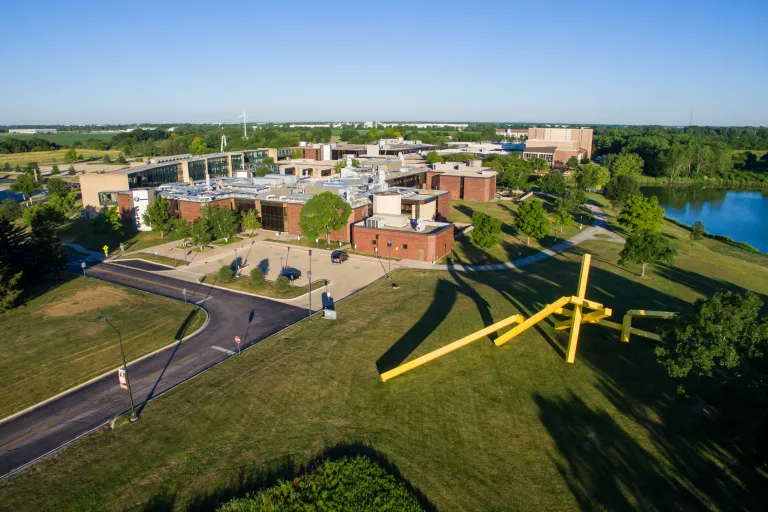
The University’s obligation to collect and report crime statistics is based on GovState’s “Clery geography”: If a Clery-reportable crime happens on or within the University’s Clery geography, then it must be included in GovState’s statistics. As such, a CSA must report a possible crime to the University if that crime might have happened on or within GovState’s Clery geography.
According to the Clery Act, GovState’s Clery geography is composed of the following:
- Buildings and property that are part of the GovState campus in University Park, IL;
- Public property within or immediately adjacent to and accessible from the GovState] campus; and
- GovState’s non-campus buildings and property.
- A CSA leaves the University; or
- A CSA's responsibilities change significantly.
Don't wait for an annual review to report a change.
Keeping CSA information current helps ensure that individuals receive the appropriate information and training for their roles.
Non-Campus Property
Properties Beyond Campus
As is clear from the definition of Clery geography, Clery reporting is not limited to the GovState campus.
Certain buildings or properties located away from the main GovState campus may be considered non-campus property under the Clery Act.
Generally, a property may fall into this category when it is:
- Owned or controlled by the University;
- Used in direct support of, or in relation to, the University's educational purposes;
- Frequently used by students; and
- Located outside the reasonably contiguous geographic area of the main campus.
The University's Clery compliance process considers these locations when determining the University's annual crime statistics.
Overnight Travel May Create Clery Reporting Responsibilities
Overnight Travel May Create Clery Reporting Responsibilities
Given the applicable definition of “non-campus property,” University-sponsored student travel can also create Clery reporting obligations.
A trip may need to be considered for Clery purposes when:
- Students are traveling as part of a University-sponsored program or activity;
- The University arranges or controls the lodging; and
- The students stay overnight.
Examples might include:
- Academic field programs;
- University-sponsored conferences;
- Athletic travel;
- Student organization trips;
- Study-related travel; and
- Other University-sponsored programs involving overnight accommodations.
What Should Departments Report?
Departments at GovState should notify the Department of Public Safety when they:
- Lease or control property away from the main campus;
- Frequently use a particular off-campus facility for University programs;
- Establish a recurring location for student activities; or
- Enter into an agreement that gives the University control of a property or specific space.
Departments should report the location even if they are unsure whether it meets the federal definition of non-campus property.
Departments should also provide information about University-sponsored overnight student travel to the Department of Public Safety.
Helpful information includes:
- Destination;
- Hotel or lodging name;
- Street address;
- Dates of the stay;
- Department or program sponsoring the trip; and
- The nature of the University-sponsored activity.
Day trips generally do not create the same Clery reporting obligation associated with overnight lodging.
If a student independently chooses and pays for their own lodging without the University arranging or controlling the accommodation, the circumstances may be different.
When in doubt, report the travel information so the University's Department of Public Safety can make the appropriate determination.

What Happens With Travel and Property Information?
Information submitted by departments helps the University identify locations that may need to be included in its Clery reporting process as part of GovState’s Clery geography for a given period of time.
For qualifying locations, the University may contact the appropriate law enforcement agency to request crime statistics for the relevant location and time period.
For example, if GovState sponsors an overnight student program at a specific hotel and the University has the required control or arrangement over the lodging, the location may need to be evaluated as a Clery-reportable non-campus property location.
If the location qualifies, the University may request applicable crime statistics from the law enforcement agency with jurisdiction over that location.
This information can then be incorporated into the University's annual Clery crime statistics.
CSA Training
Be Prepared to Recognize and Report
Employees designated as Campus Security Authorities should complete the University's required Clery training, which, for CSAs who are GovState employees, includes a web-based training module and supplemental written materials.
Training helps CSAs understand:
- What makes someone a CSA;
- What crimes must be reported;
- How to respond when someone shares information about an incident;
- What information should be collected;
- How to submit a CSA report;
- What not to do when receiving a report;
- How Clery reporting differs from a police investigation
CSA training is intended to give employees the confidence and information they need to respond appropriately when someone comes to them with a safety concern or report of crime.
Employee CSAs can access the web-based module through GovState’s Vector Solutions Learning Management System platform, just like other employee trainings. The supplemental materials are available through the Department of Public Safety.
Non-employee CSAs will be informed about their training.
When in Doubt, Report
You do not need to be a Clery expert to be a good CSA.
If someone tells you about an incident and you are unsure whether it qualifies as a Clery crime, location, or reporting situation, submit the report and let the University's Clery compliance personnel make the determination.
Your role is to:
Listen.
Document.
Report.
Connect.
You are not expected to investigate the incident or determine what happened.
Questions About Clery?
The Department of Public Safety is available to help members of the GovState community understand their responsibilities and reporting options.
For questions about:
- Campus Security Authority responsibilities;
- CSA reporting;
- Clery geography;
- Non-campus property;
- University-sponsored travel;
- CSA training; or
- Other Clery compliance questions,
contact the Governors State University Department of Public Safety.
Governors State University Department of Public Safety
C Building, Room 1375
1 University Parkway
University Park, IL 60484
708.534.4900
For emergencies, call 911.
The Department of Public Safety provides police services 24 hours a day, 365 days a year and is committed to a community-oriented policing philosophy centered on the safety, dignity, and well-being of the GovState community.
Together, we can help keep GovState informed, prepared, and safe.