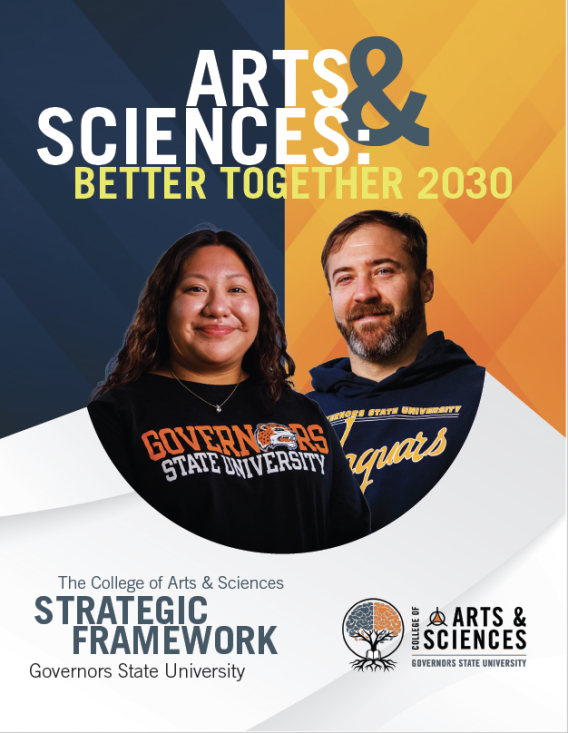
Arts & Sciences: Better Together 2030
The College of Arts & Sciences Strategic Framework
Governors State University
At Governors State University, our identity is defined by the depth of our connections. As we launch our college strategic framework, Arts & Sciences: Better Together 2030, we align ourselves with GovState’s institutional vision for the region. This framework is not an administrative document; it is a living commitment to the communities we serve and the futures we are building together.
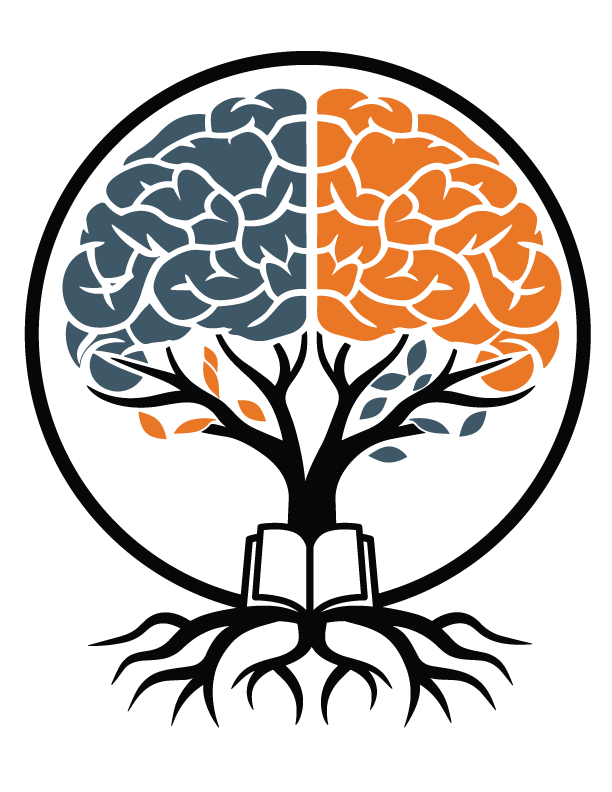
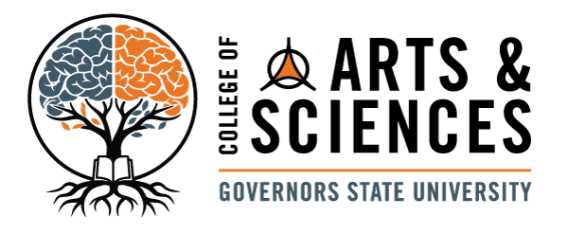
Our college emblem makes this commitment visible: a tree that reflects who we are, what we value, and where we are going.
At the base of our tree are deep, searching roots — our profound connection to the Chicago Southland and the rich, varied life experiences our students bring into every classroom, on campus and online. Our students do not arrive as blank slates; they bring stories of resilience, family, work, and community. In CAS, we treat these lived experiences as a vital counterpart to academic inquiry, weaving them together with disciplinary expertise so our graduates can make an immediate, meaningful impact in their families, workplaces, and neighborhoods.
Rising from these roots is the trunk of our tree, anchored in an open book. Across our diverse programs, we cultivate curiosity as a habit of mind and rigorous critical thinking.
Whether analyzing a text, conducting lab research, painting a canvas, or writing code, students learn to ask deep questions, challenge assumptions, and seek truth. This foundation prepares every GovState CAS graduate to be adaptable, resilient, and ready to solve complex problems.
At the top, our tree’s canopy expands into a vibrant representation of the human brain, bridging the analytical and the creative. This “whole-brain” synthesis is the ultimate promise of an arts and sciences education.
As emerging technologies and artificial intelligence reshape how we learn, our response is a steady commitment to human-centered, relational, and embodied pedagogy. In CAS, technology and AI are tools to supplement (never to supplant) the relationship between faculty and students. This same spirit of bridging invites us, as a college, to name the shared educational values every CAS graduate carries into the world, whatever their major.
Ultimately, Better Together 2030 is our path toward future-focused academic excellence, grounded in economic mobility and social justice, helping our students build futures of their own making, more just and more hopeful for everyone.
Thank you for bringing your intellect, your passion, and your unique voice to this shared journey. Our roots run deep, and our canopy keeps reaching upward.
Sincerely,
Jason Zingsheim, Dean and Professor
College of Arts and Sciences
Strengthen Student Success and Completion – Identify and address structural barriers that affect persistence and completion.
This goal focuses on improving student success and completion by identifying and removing structural barriers that hinder persistence, particularly for first-year, first-generation, and adult learners. It emphasizes creating a student-ready College through inclusive planning, relational and high-impact teaching practices, flexible scheduling, and targeted academic supports to improve retention, persistence, and course success. Central to this effort is fostering a culture of care, belonging, and meaningful engagement, including expanded field experiences that connect learning to real-world pathways.
Objectives:
KPIs:
Fostering a culture of care, belonging, and meaningful engagement
Deepening community and civic engagement by expanding partnerships that create meaningful, real-world learning opportunities for students
Expand Community and Civic Engagement – Increase partnerships, civic engagement opportunities, and applied research experiences.
This goal focuses on deepening community and civic engagement by expanding partnerships that create meaningful, real-world learning opportunities for students. It emphasizes applied learning through internships, project-based experiences, applied research, and industry collaborations, all of which build career-relevant skills. By developing additional certificates, strengthening SXL crosswalks, and integrating workforce-aligned experiences into coursework, the College prepares students to contribute effectively to their communities and professions.
Objectives:
KPIs:
Communicate the Value of CAS – Articulate a cohesive narrative that demonstrates the relevance of liberal arts education in today’s world.
This goal centers on clearly articulating the value of a CAS liberal arts education by developing a cohesive, compelling narrative that resonates with multiple audiences. It emphasizes aligning key messages across platforms—such as the website, media, general education courses, signature curricular experiences, and community partnerships—to demonstrate how learning in the liberal arts and sciences builds critical thinking, adaptability, and career readiness. By elevating faculty voices and student experiences through storytelling and media, CAS will strengthen its identity and impact.
Objectives:
KPIs:
Learning in the liberal arts and sciences builds critical thinking, adaptability, and career readiness
Designing and sustaining innovative, student-centered curricula that support academic success, adaptability, and long-term relevance
Support Faculty Success and Growth - Strengthen teaching excellence, expand professional development, and enhance faculty capacity to innovate.
This goal focuses on supporting faculty success and growth by strengthening teaching excellence, advancing professional development, and expanding CAS’s capacity for innovation. It emphasizes research, creative activity, and the scholarship of teaching and learning as engines for innovation, while encouraging interdisciplinary collaboration and disciplinary advancement. Through increased participation in pedagogy, research, writing, and reading groups, faculty are supported in continuous growth that enriches student learning and academic vitality.
Objectives:
KPIs:
Innovate the Curriculum - Develop flexible, student-centered pathways, expand interdisciplinary opportunities, and integrate emerging competencies to support student success and lifelong learning.
This goal focuses on designing and sustaining innovative, student-centered curricula that support academic success, adaptability, and long-term relevance. It emphasizes flexible pathways, stackable credentials, and multi- and interdisciplinary programs, while integrating AI literacy and emerging skills across disciplines. Through continuous improvement and a commitment to curiosity and lifelong learning, the curriculum remains responsive to student needs and future workforce demands.
Objectives:
KPIs:
The College of Arts and Sciences developed its Strategic Framework through an inclusive, collaborative process that engaged faculty, staff, administrators, advisory board members, and campus stakeholders. From January through July 2026, participants worked collectively to identify priorities, refine goals, establish measurable outcomes, and align the College's vision with Governors State University's Better Together 2030 Strategic Framework. The result is a shared roadmap that will guide decision-making, innovation, and continuous improvement across the College through 2030.
Governors State University's Better Together embodies our belief that the University thrives through collaboration, a shared sense of purpose, and a dedication to student success, excellence and community engagement—all grounded in our mission, vision and values.
Click here to explore the College of Arts and Sciences Strategic Framework and learn how the College supports and advances GovState’s Better Together Institutional Strategic Framework (ISF) 2030 initiative.
Governors State University
1 University Parkway University Park, IL 60484