
Serving Our Region and Empowering Mentorship: Occupational Therapy at GovState
Author: Gillian Vinson, Alumni Relations Engagement Coordinator
The ability to process new information using our five senses is a given for most people. It is hard to envision needing support for sensory processing, but that is the reality for those with intellectual and developmental disabilities (IDD). While processing support is provided through the education system, after high school graduation, advocacy for individuals with IDD is reduced to family and friends. For more than 50 years, community organizations like South Chicago Parents and Friends Inc. (SCPF) have provided support centers for adults with IDD, allowing these individuals to thrive in places that become central to their daily routines — some for the rest of their lives. When South Chicago Parents and Friends (SCPF) needed help creating sensory spaces at two of its adult day centers, Governors State University (GovState) alumni answered the call alongside faculty and current students, forming an intradisciplinary occupational therapy team.
This project was led by Professor Emerita and alumna Dr. Caren Schranz '11 alongside a DrOT cohort of three alumni, including Dr. Dustin Hogan, Dr. Jillian Rancatore, and Dr. Samantha Rietveld. Dr. Schranz empowered this cohort to mentor current Master of Occupational Therapy (MOT) students — demonstrating the power of circular mentorship in the communities where GovState graduates live and work. Beginning in the summer of 2024, this extensive volunteer initiative spans over two years of research, planning, and execution. In comprehending the impact of this project, consider the process by which our OT experts designed and implemented their practice.
Understanding sensory processing is vital to helping individuals with IDD navigate sensory rooms. Occupational therapists understand and implement care strategies based on sensory processing abilities. Under the mentorship of the DrOT cohort, MOT students led a workshop where SCPF staff learned about the role of sensory rooms in assisting sensory processing. After the workshop, the intradisciplinary OT team then developed a survey to better understand individual sensory needs at SCPF’s Cap Center and Dolton Center. SCPF staff completed this survey on behalf of 66 adults with IDD, answering questions addressing habitual behavior. Based on the survey results, GovState’s OT team presented a proposed equipment list for the sensory rooms. Even when presenting initial recommendations, our OT experts relied on the SCPF staff’s personal insight to finalize an equipment purchase
order.
The next logical step was to determine the actual design of sensory rooms based on equipment needs, space allotments, and sensory optimization. GovState's OT experts worked with contractors to design each sensory room, intentionally prioritizing eased sensory processing. Once room designs were finalized, it was time to create training
materials while the rooms were being established. During construction, our OT team provided step-by-step safety and equipment training for SCPF staff, using infographics and video tutorials.
In April 2026, the sensory rooms were completed; however, the work is far from being finished. Our OT team continues to support this community project by training SCPF staff to ensure the longevity of each sensory room. For many adults with IDD, these sensory rooms provide a calming environment that can reduce anxiety, improve focus, and make daily activities more comfortable. With the help of our OT experts, participants can fully engage in
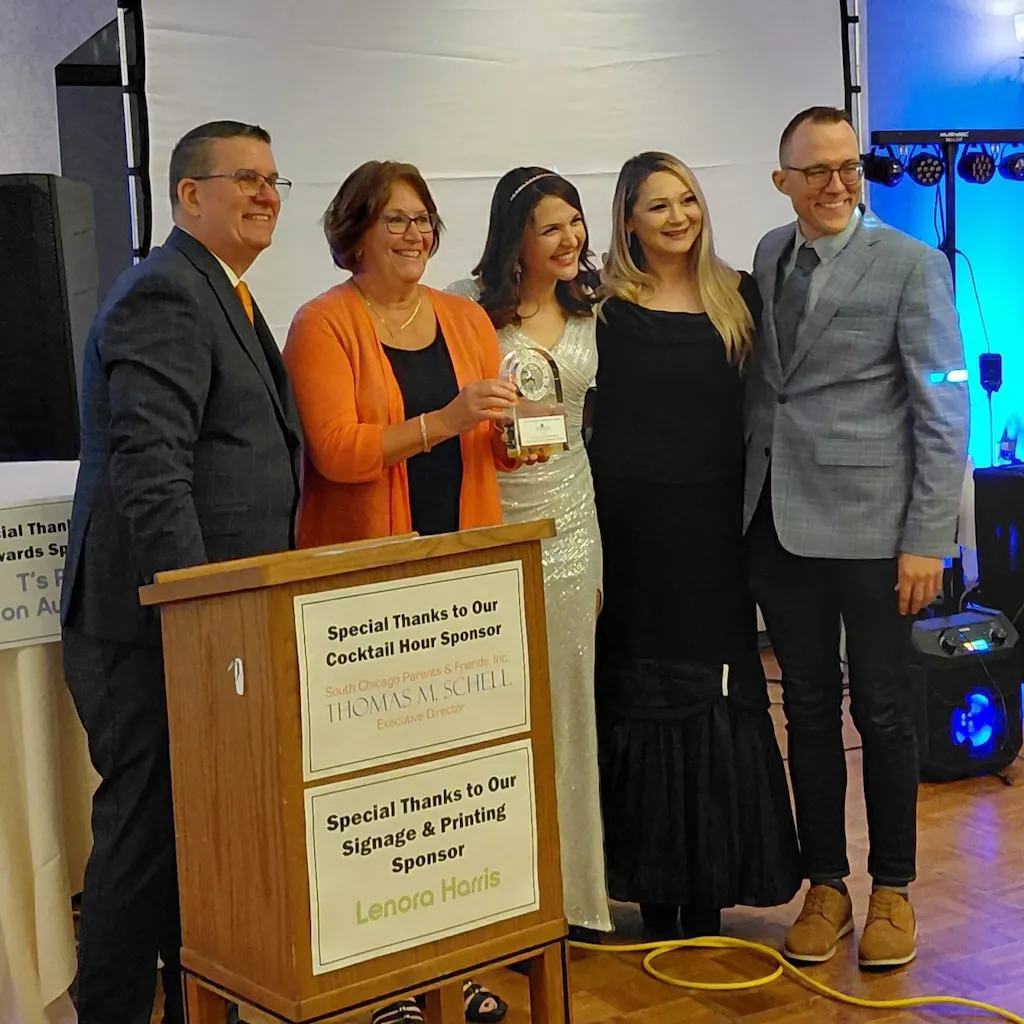
programs that enrich their independence and quality of life. In honor of their outstanding service, SCPF recognized our OT department with the You Make a Difference Award during the organization’s annual celebration.
As a division of the College of Health and Human Services, founded 30 years ago, the OT department at GovState continues to expand experiential learning opportunities for budding practitioners. Our OT department’s connection to SCPF is an example of how reciprocal partnerships serve our academic community and our region.
The collective perspectives of GovState alumni, faculty, and students added tremendous value to this project, reinforcing the importance of teamwork in the occupational therapy profession. When an intradisciplinary OT team can use their expertise to support local initiatives, they fulfill the College of Health and Human Services’ mission to leverage community partnerships for the health, well-being, and economic development of our communities. You can support this mission by donating to the College of Health and Human Services Excellence Fund.